Project | windowswear


The Bologna leather house’s new 250-sq-m Milan flagship trades dense merchandising for a slower, gallery-paced retail experience.
For a heritage leather house, the past can easily become a burden in retail design, with archival references and craftsmanship cues overwhelming the products themselves. In Testoni’s new Milan flagship, François Leite presents a more spatial interpretation of the Bologna-based brand. The store translates Italian identity through the language of arcades and covered passageways, transforming civic architectural references into softly curved lime-rendered walls, deep red terrazzo flooring, and a sequence of carefully framed views. Bags and shoes are displayed at a deliberate distance, positioned beneath vaults and suspended lighting, encouraging customers to pause between noticing a piece and reaching for it.
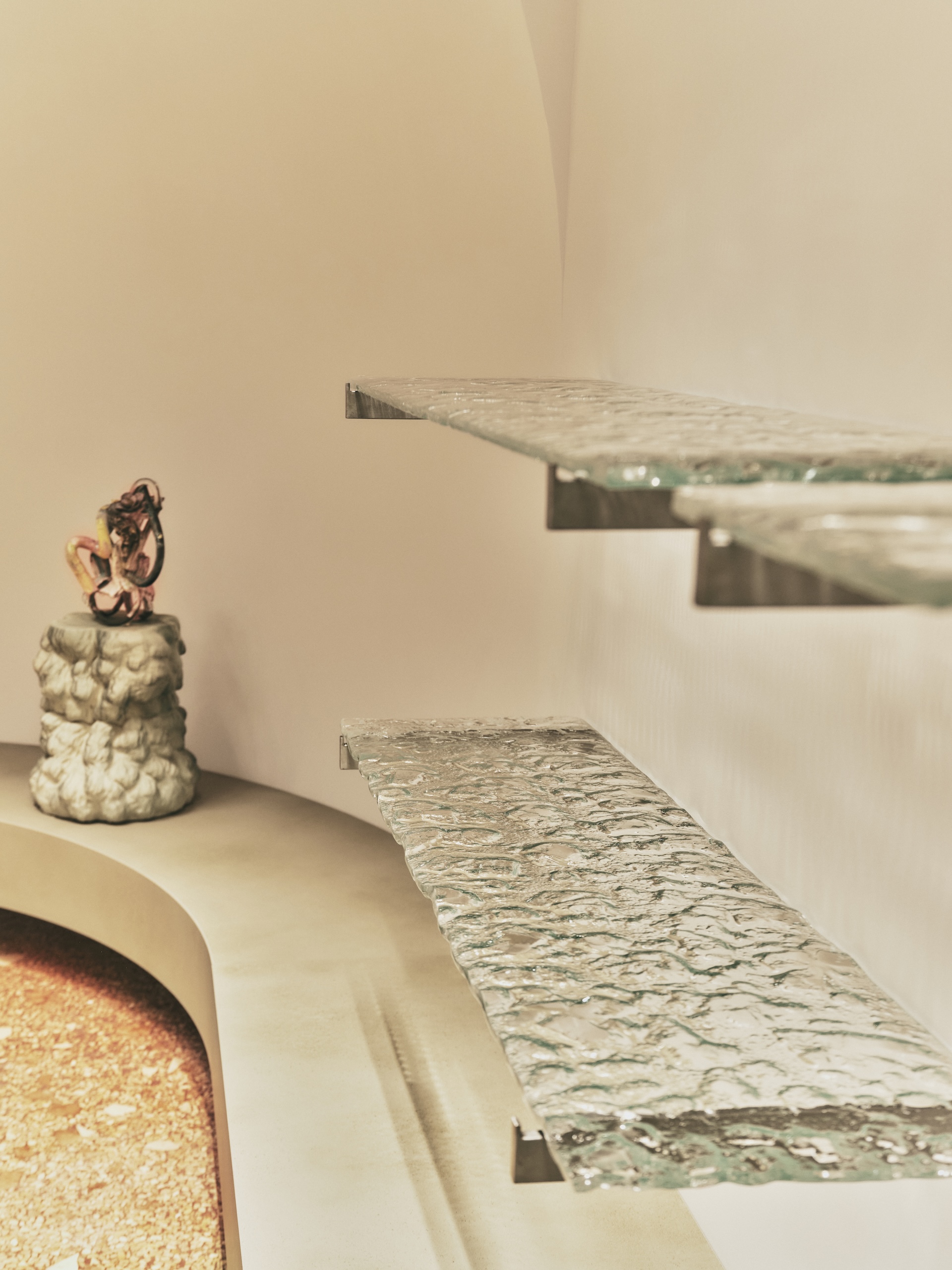
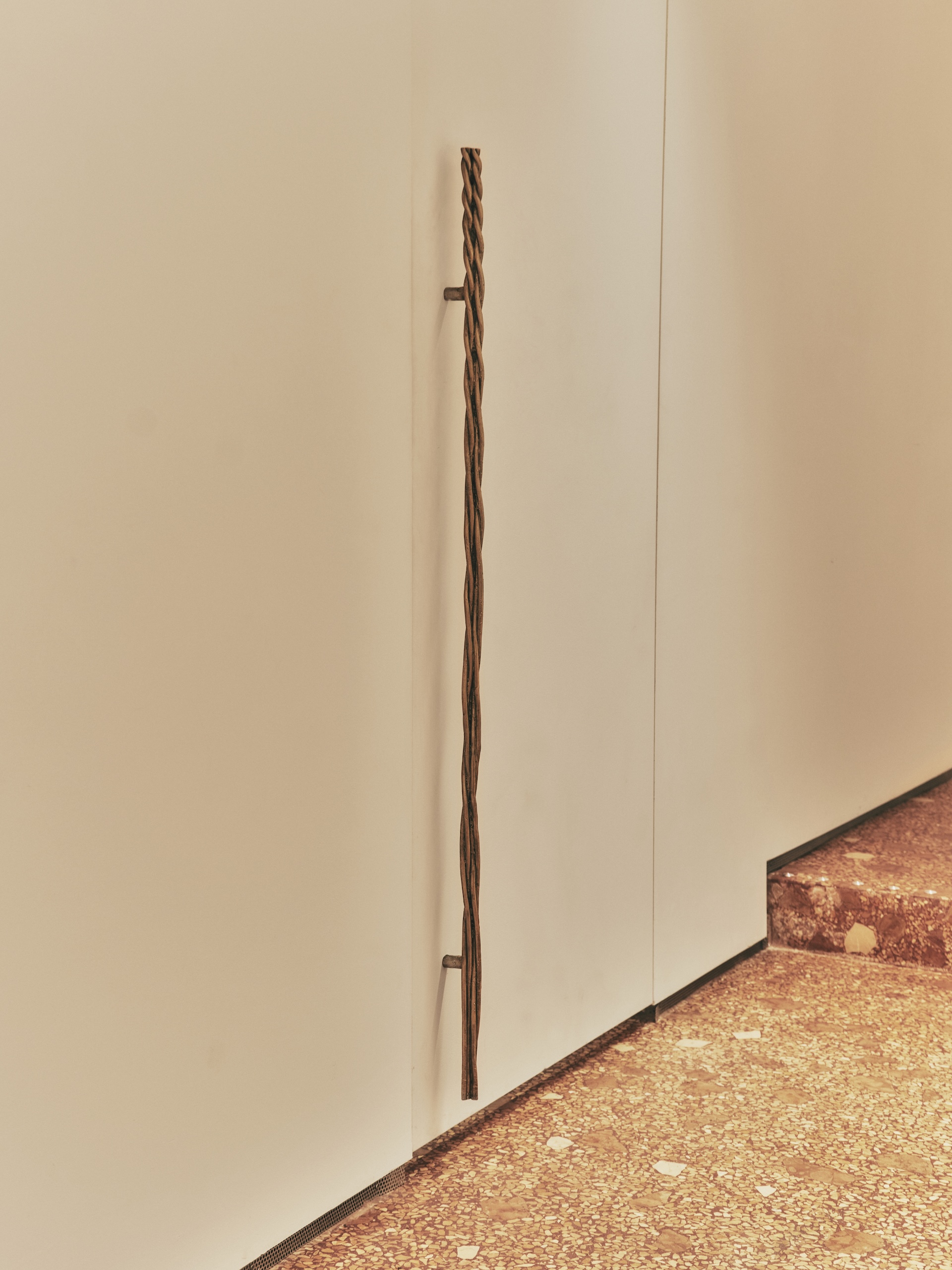
Italian heritage brands drawing inspiration from classical architecture have become a recognizable retail design trend. While All Design Studio’s Coscia store in Changshu relies on decorative columns, checkerboard flooring, and vibrant colors, Leite takes a more restrained approach, abstracting historical references rather than recreating them directly. The project aligns with a broader shift recently identified by FRAME: retail design moving away from frictionless efficiency. At Testoni, this philosophy is reflected in materials and displays that maintain a subtle distance between the customer and the products. Lime plaster grounds the interior, while cast-glass shelving by 6 prevents the bags and shoes from becoming too heavily tied to notions of heritage. At the entrance, braided bronze door handles by Maison Intègre reinterpret Testoni’s signature spiral leather stitching in architectural hardware.
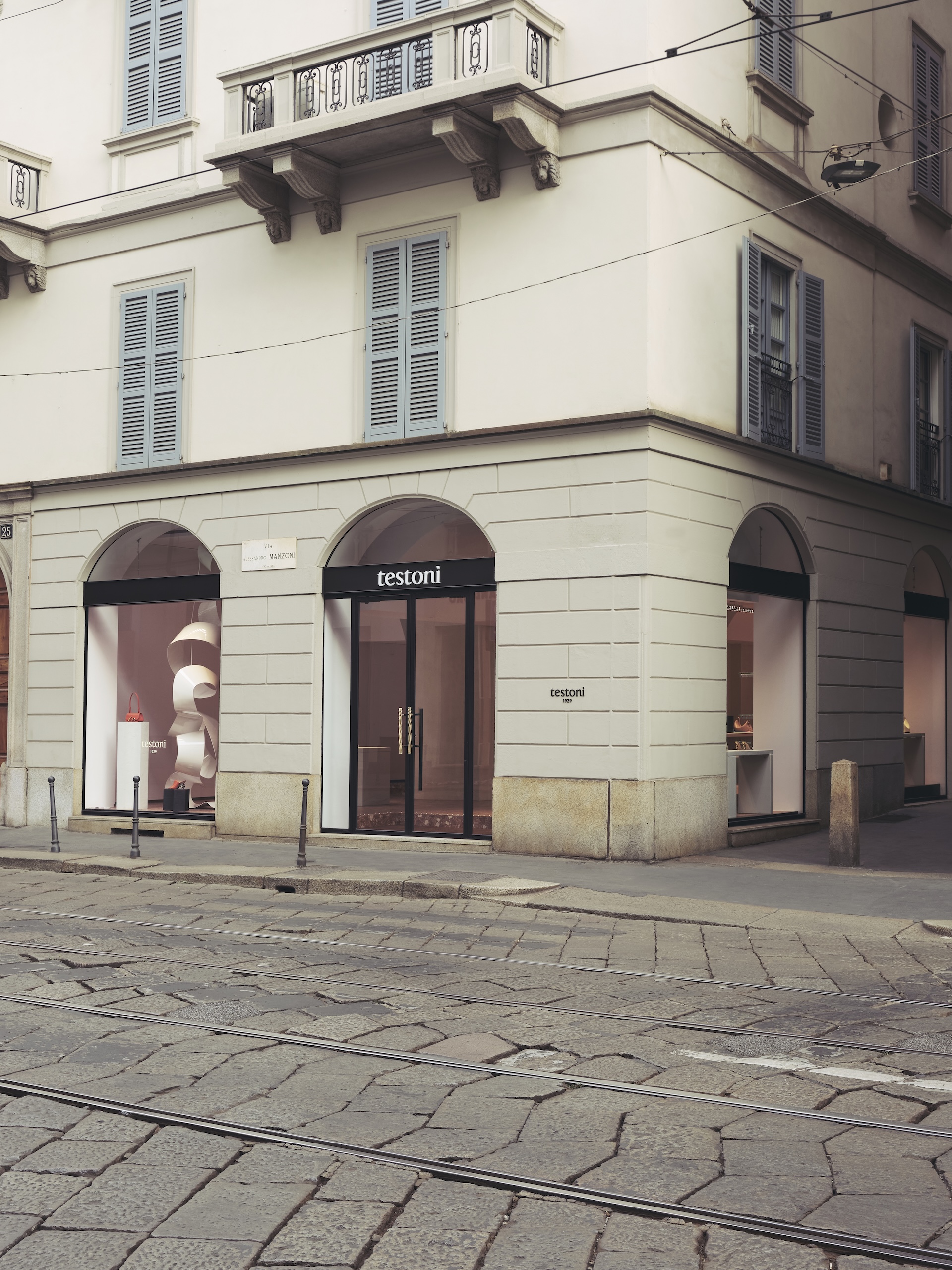
Testoni’s flagship unfolds as a carefully choreographed promenade, leading visitors through a main gallery, central area, men’s section, two display windows, and a pair of lounges. The layout maintains a connection to the street while gradually guiding visitors through narrower passageways, arched openings, and intimate display niches. Products are arranged on low plinths and along the walls rather than concentrated in dense merchandising displays.
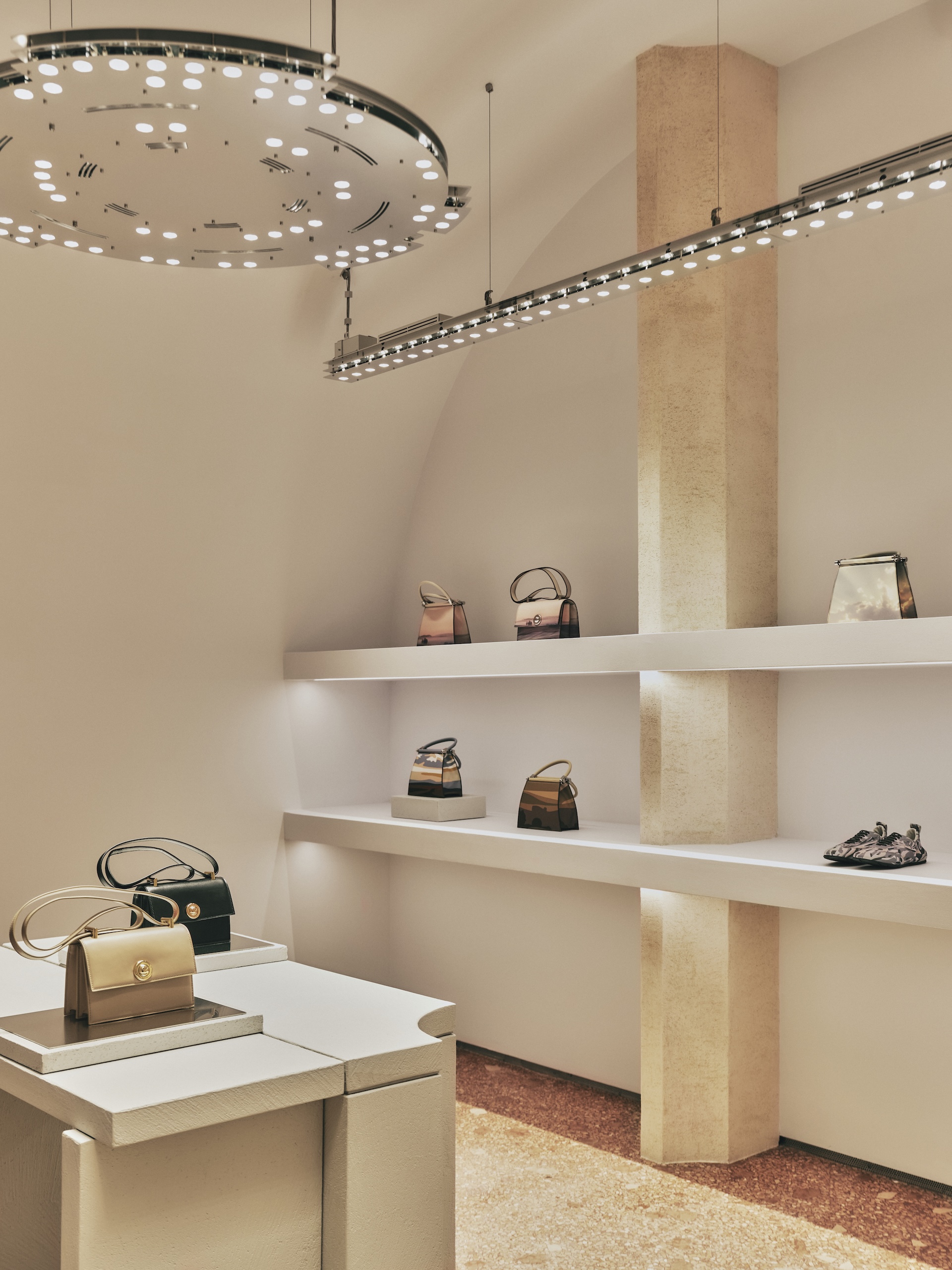
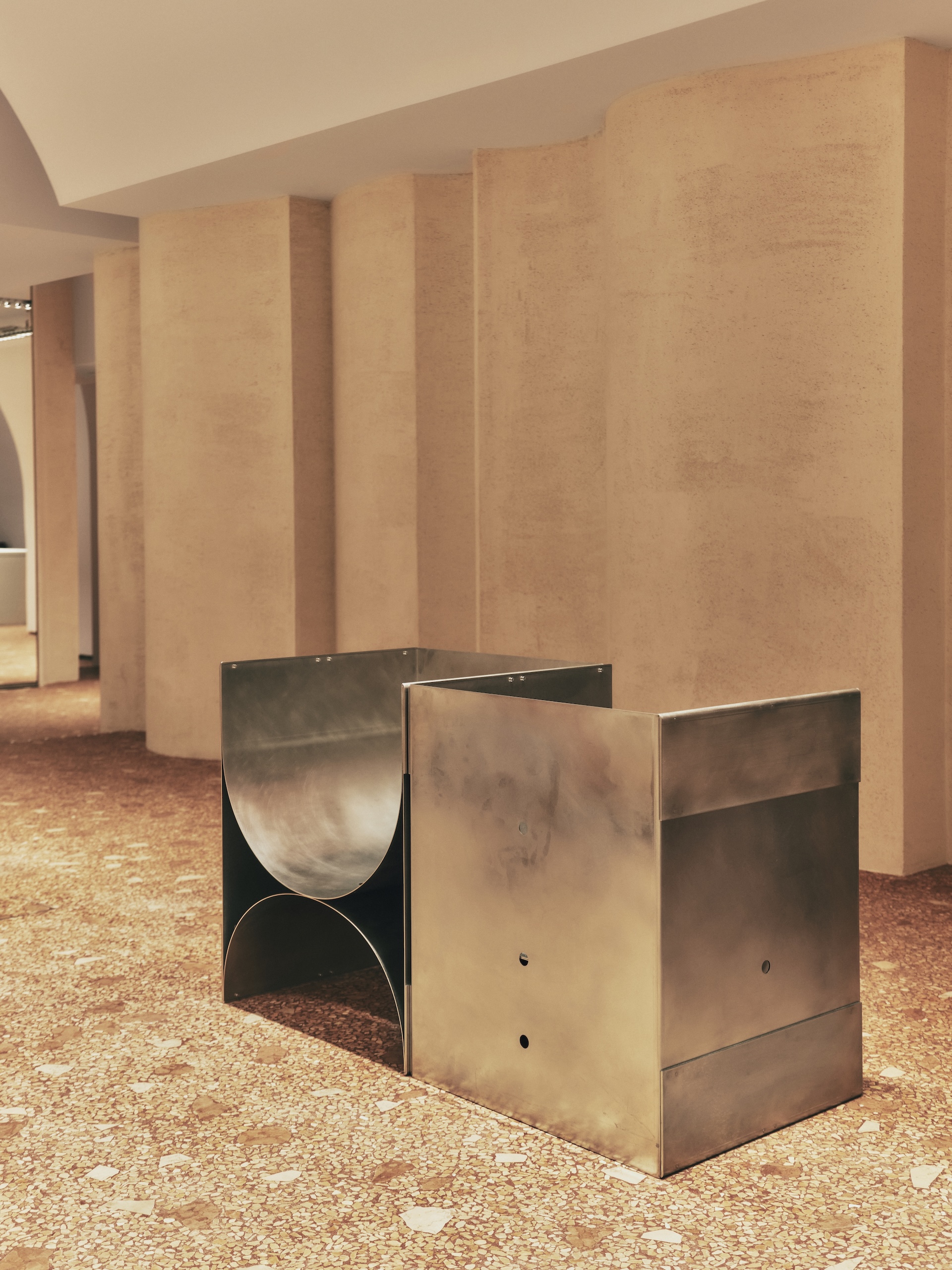
Existing structural columns have been enclosed in plasterboard partitions and coated with lime render, transforming them into scalloped, almost excavated architectural forms. The lime finish shifts subtly between pale peach and cream tones, with its texture becoming more pronounced where curves catch the light from overhead fixtures. Deep red terrazzo flooring with Italian marble inclusions runs throughout the boutique, while raised platforms introduce subtle changes in level and spatial rhythm.
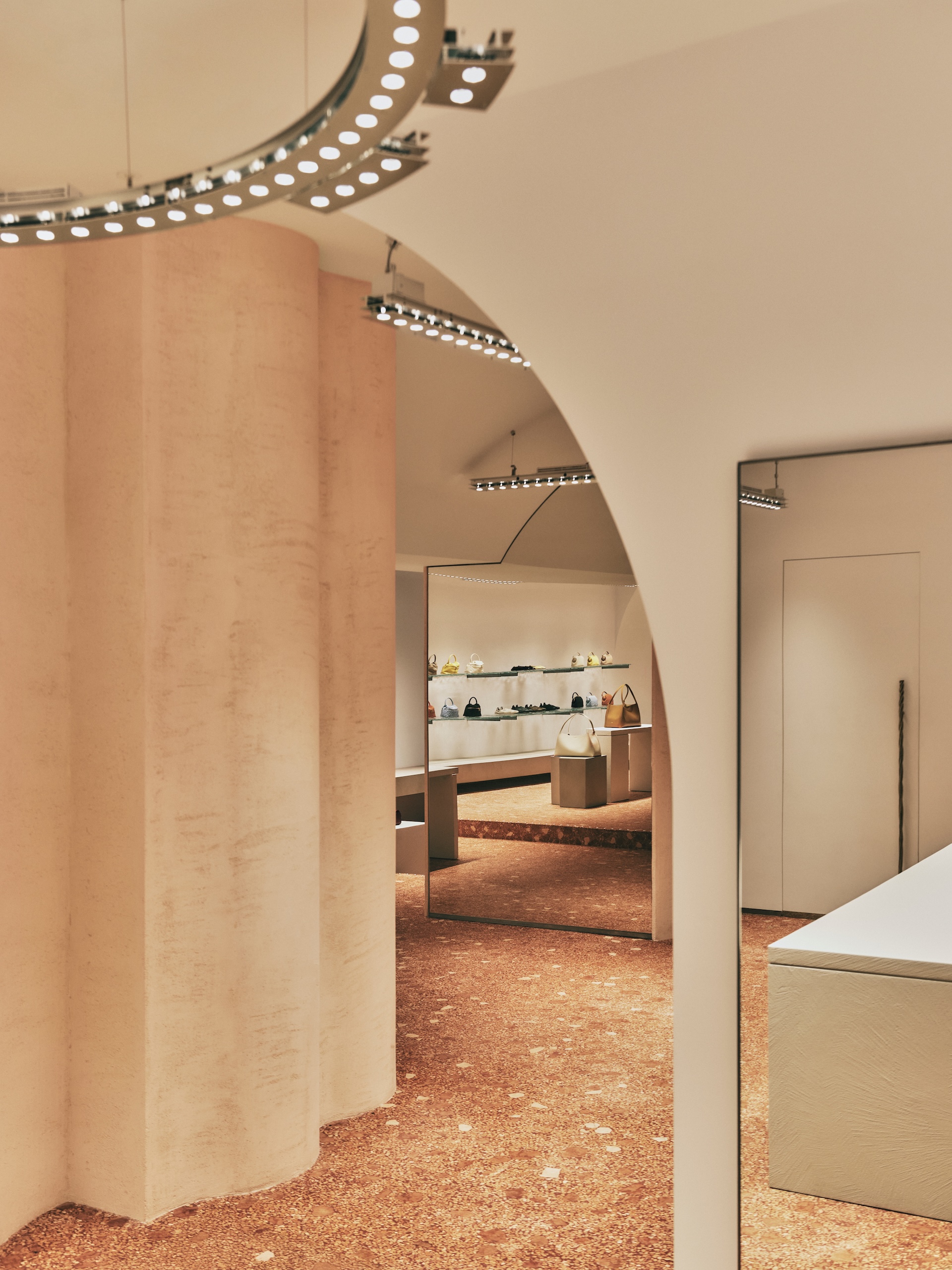
Above, Benoit Lalloz’s custom-designed Network lighting system complements the architecture without disappearing into it. Arcs, linear elements, and circular fixtures are suspended beneath the vaults and domes, creating a delicate metallic composition of 1,557 individual points of light above the plaster surfaces. In the main gallery, 6’s glass shelving appears as thin, irregular slabs mounted against the walls, their green-tinted edges catching the light and subtly elevating the bags and shoes displayed upon them.
Generous arched openings connect the different rooms, while full-height mirrors integrated into the thresholds extend the perceived depth of the spaces and reflect the architecture’s curves back into the interior. A curated selection of furniture and artworks contributes to a more residential atmosphere. Brushed stainless-steel seating designed by François Leite is paired with Mario Bellini’s naturally dyed leather Bambole pieces and Marion Mailaender’s Tôle seat for Maison Intègre, a folded bronze form positioned low to the floor. Capucine Guhur’s stained-ash OKO tables and pedestals display sculptures by Dan Kim, Laurin Schaub, and Hélène Segura. Nearby, an unfinished pale stone sculpture rests on a low plinth, its raw geological character echoing the marble inclusions within the terrazzo flooring. Art and design coexist with the leather goods throughout the store, broadening the narrative beyond Testoni’s own brand heritage and creating a richer cultural context for the retail experience.